Favorite Blog Post

My favorite blog post for the semester is titled "the data cycle", posted on May 17th, 2010. I would say this is exemplary of the progress I have made blogging this year because it displays several important things that are important to blogging in our class: making connections between material and discussions and analyzing texts. I, in this post made the connection that I saw between the Kentucky Cycle we were reading in class and the topic of Mr. Bolos' blog post a few days before. I made this connection which I believe shows that I am thinking critically about the things I see and hear. I also used textual examples in my post, which I think is very important. One of the main things I took away from AIS this year is that if you want to make a claim, you have to bring evidence. And in the case of my blog I did just that. I think that over the course of the year, my focus in blogging has shifted. I began blogging about pretty arbitrary topics that I found interesting personally, and finished by writing posts that thought critically about our class. All in all the blogging experience was pretty unique, and I enjoyed it a lot. I'm looking forward to weighing in on a few discussions next year on the Am Stud Blog!

Monday, May 31, 2010

Who Can You Trust?


In recent years, the public has learned more and more about the sex scandals in the Catholic Church. Testimonies have now shown that children had been sexually abused by priests as early as the eighties. Long story short the priests were using their upstanding reputations in the community to convince children and their parents to arrange personal meetings between them and the children of the community. Needless to say these meetings had very little to do with bible readings or practice for communion.
However the current scandal is the fact that the Vatican and the Catholic church has sort of turned its back to the situation. The church feels that every priest and religious figure should represent the church unconditionally, as it should be. But the sex scandal was clearly not what the church is hoping for in terms of good publicity, and therefore there has been a sort of silence in the Vatican. Now the heat is beginning to fall on the Pope for not adressing the issue of the past sexual abuses by Catholic priests.
This is, I guess just a coincendence that we were reading a scence in the Kentucky Cycle on roughly the same topic. In order for Joshua to work in the mines, he needed a birth certificate that said he was fourteen, and he was twelve. So the priest came over to sell him a forged birth certificate for a few bucks. This is unforunate that this is such a recurrent thing that the men that are appointed to guide the the world spiritually, are so often involved in morally wrong behaviors.

Saturday, May 22, 2010

TV Tokenism


In class this Friday, to add closure to Mr. Bolos' Am Stud Day presentation, we revisited the idea of tokenism in television. We watched clips of network dramas and thought critically about them. The overlying theme is that minorities rarely play central characters in these programs, and that oftentimes the minorities are treated more poorly by the other white actors on the program. This treatment results, according to Mr. Bolos, in an increased racist attitude in viewers. Clearly I am not a psychologist and wouldn't be able to prove anything for or against that. But among the series of questions we were challenged to answer, I was most drawn to one:
Is there a problem with TV Tokenism? Is it wrong?
My answer is yes, I think that it is wrong. I think that what we, and the networks should strive for is equality among races. When we label a character as a token, it is as if they are just space fillers that are there as a sort of affirmative action, which is not something I really want to be contemplating while watching Jack Bauer track down the IRK president. I think that television should just be in the market for making the best possible show, although we have learned that is is simply a money making operation. I think that if the quality of the show will be bettered with a predominantly black cast, then so be it, and the same goes for a white cast. I see a good connection with the Herstory project we did, where my group looked at the Equal Rights Amendment. The women behind the bill just wanted the same rights as men, for better or worse, and not random amendments for better pay or a shorter work day. Overall, I think its frustrating that race is still such a problem in the US that even television has to be political, not that I'm forgetting the past racial injustices this country has and still does see.

Monday, May 17, 2010

The Data Cycle


Reading the Kentucky Cycle a few days ago, I realized there was a precarious connection to be made with another topic we have been discussing, the existence of a data driven society.

The topic arose when Mr. Bolos blogged on the Am Stud Blog about how the world, particularly schools have come to value, and even depend on data. Colleges have begun to define students with a few numbers that they claim assess student's worth. There was a transition at some point from where students were not only guaged by a brief numerical summary of academic success but a more in depth report.

I noticed a parallel between the Kentucky Cycle and this concept. On pg. 91 Jeremiah Talbert is swindling Patrick Rowen out of every last dime of his estate after Jeremiah bought the debts from a downed bank (Sound Familiar). The quotes that really struck me were:


"Land is just dirt Mr. Rowen. It's worth only what the market is willing to pay for it. No more, no less"


"Land don't tolerate no fools. I know that don't mean nothin' to no bank man pushin' his little peices of paper"


The land, that Patrick Rowen had lived on his entire life, and had grown to learn was the most valuable thing in his life, was simply deemed worthless by Jeremiah and the courts. The land, which had been well taken care of, was now worth considerably less because some bank thinks so. This value system is where I see the parallel to the data driven society. Colleges see the value of a student through a few numbers and very little less, even though it is sure that those students are far more complex than a few numbers can possibly summarize. Its a shame that our society has been reduced to this but it's a reality today. If our society came to value more than just the data, how would it be different? Do you think there is any truth to the data our society chooses to value?

Sunday, May 2, 2010

Kentucky Derby


I know I'm breaking the mold of our class to blog about something other than Junior Theme, but I thought I'd give it a try.
For those of you that didn't know (me included), the Kentucky Derby was Saturday. Now I don't know very much about horse racing, nor am I an equestrian in any way. My desire to blog about this is simply out of curiosity.
I can understand that there is a deeply rooted history associated with the Kentucky as it is the oldest annual sporting event in the US today, this year being the 136th running of the event. I can respect the tradition of the event, where the women wear UFO sized hats and the men wager tens of thousands of dollars on horses who have the best sounding names.
But besides these people who are part of the tradition, who else really follows the Derby? There are only three televised races a year that compose the Triple Crown: The Kentucky Derby, The Preakness Stakes and The Belmont Stakes. How can someone really be invested in a sport that is only on television three times a year? Could it be that viewers like the idea of the event more than the actual quality of sport? Any other ideas?

Friday, April 23, 2010

Burqa Ban


France has been dealing with a problem that most Americans would find strange. The country is currently in a struggle to find its true "identity". Huge numbers of North Africans have immigrated to France in the pursuit of a better life, and the problems have evolved from there. The issue has become so large that the government is even forced to get involved. French President Nicolas Sarkozy is now proposing a ban on a traditional Muslim clothing, the burqa. He is suggesting that the burqa not be allowed in any public venue.
The country is rather divided on the issue, conservative people feel that the Islamic influence on the country is too great and that it should be limited. More liberal people however feel that a blend of cultures is healthy for the nation's indentity.
Sarkozy, who was elected in 2007, won the vote by gaining the approval of a rather conservative constituency. In turn he is acting, for the most part, in the interest of conservative France.
Having already been familiar with the political and social issues in France, I am not shocked by these recent developments. But as a kid living in the states I can imagine that most Americans would be rather shocked by these events.

Do you think a ban on religious attire could exist here, despite the freedom of religion granted to all Americans? Also consider the debate of the French idendity. What do you think is the American "identity", and how did it come to be?

Thursday, April 22, 2010

Ninjas!


The picture may be inspiring some less than serious reactions, but a country in the Pacific has managed to be overrun by "ninjas". East Timor, a neighbor of Indonesia in the Pacific Ocean has been in a virtual civil war with these masked assailants. These "ninjas" are essentially a militant anti-government group trying to gain power in the country. the grips of a six-month campaign aimed at curbing "ninja" activities. "Any ninjas that want to take us on, your final stop will be the Santa Cruz cemetary." I can't help but laugh but this just wreaks of the kind of bad drama that unfolds in a childrens comic, and its happening in a real country!
The country might find itself in a little bit of a pickle, as this corps of ninjas is reportedly in the ballpark of 90 thousand strong, nearly ten percent of the population of East Timor.
What I am a little confused about is who decided to coin these mysterious criminals as "ninjas", seeing as "no one in the country would ever self-identify" as a ninja." Clearly there is someone that is just mocking the situation and therefore added a juvenile twist to the story. It is anything but funny considering several people have been victims of the ninjas, several people have been murdered this year. Especially when the country has just ended a 24 year period in which they were occupied by Indonesia, where an estimated 100,000 people died. My questions is why did this country's problem become some kind of joke? Is it the media's fault? (see for yourself)? The government's?

Monday, April 12, 2010

Schools Shellin Out Cash

In class today, as an introduction to the soundless video, we discussed the concept of monetizing school, work, and life itself. I, prior to this discussion had read the most recent TIME magazine which included an article on the monetary compensation of students in struggling schools in predominantly inner city neighborhoods across America. Studies were run in Chicago, New York, Dallas and Washington. A different approach was taken in each city. Chicago rewarded students for good grades, Washington for good behavior and attendance, NYC for test scores, and the only unanimously positive result, Dallas rewarded students for each book read during the initiative.
The initiative was launched by Roland Fryer, an economics professor at Harvard, who scoured the country looking for schools to participate in the study. The feat was not as easily said than done. The majority of schools stuck to their moral guns saying that students should learn for the love of learning, despite the majority of these schools testing well below state standards.
The result of the study showed that some incentives worked better than others. The only city that showed extremely positive results was in Dallas where they paid students per book read, and consequently test scores in reading increased. The interesting part is that Dallas had the lowest amound earned per student at $13.81 versus Chicago students that on average earned a whopping $695.61. This statistic alone lead me to believe that there was no correlation between compensation and grades and standardized test scores. Whats your first impression? Did you, like me say "of course it will help"? Would such an initiative have an impact at New Trier?

Sunday, April 11, 2010

Tiger's Icebreaker


After the emotion of Phil Mickelson's three shot victory at Augusta, whose mother and wife are both suffering from breast cancer, the attention naturaly still landed on the PGA's greatest and most notorious icon. Tiger found himself in the hunt through 63 holes of the Masters but a few costly back nine errors in the final round put him a few shots out of contention. These errors included a missed one foot tap in for par that he uncharacteristically slapped at only to see it lip out. Tiger, after 72 holes, finished at 11 under, five off the lead.
What troubled me was the post round interview with CBS's Peter Kostas, where Woods didn't tone down his incredibly competetive mindset saying that he was dissappointed for not winning after his five month hiatus. Part of me wants to believe that Tiger is in a constant winning mindset and he truly feels that he will win every tournament he enters (which most of the time he delivers), but during this Masters I found this hard to believe. He has been away from the game, letting the news of his wrongdoings simmer and his image as the posterboy for professional sports is in shreds. The cynical part of me says that Tiger was simply using this year's Masters for exposure, to remind the world that he will be coming back to the tour, and that people better get used to it. The fact that he finished tied for fourth was simply a bi-product of his attempt at exposure. Although this is a scary thought that a player who hasn't played a professional round in five months contended in the most important and prestigious tournament on the PGA tour, this is just a testament to why he is "arguably" considered the best to ever play the game. Did Tiger do this to improve his image? Was he approaching this tournament for the same reasons as he did pre-scandal?

Sunday, April 4, 2010

Huta Who? Hutaree


This past week eight arrests were made of the leaders of the extreme right wing group called the Hutaree Militia. This Michigan based group had been monitored for years by the FBI but not until now had any arrests been made.
The word Hutaree, although not found in any English dictionary, means, according to the members of the group "christian warriors". The investigation revealed that the main goal of the militia was to assassinate any local or federal law enforcement. The FBI's files show the Hutaree's plan of attack included:
-killing a member of law enforcement after a traffic stop
-killing an officer at their home
-ambushing officers in rural communities
-luring an officer to a false 911 call
-attacking a funeral procession of a downed officer
Clearly these people should not be on the streets, as the rationale for such acts of violence is not attainable by any sane person. The thing is that all eight people are being put in jail awaiting trial. Normally people are innocent, and therfore free, until proven guilty, but not in this instance. Although they have only been found conspiring these plans, they are considered a threat to all. I believe that these people should be in prison awaiting trial but a part of me thinks back to the civil liberties aspect of our class. Is this right? Is it a violation of their civil liberties to put these people away who have not even been convicted of anything thus far?

Wednesday, March 17, 2010

A Preview of John Dos Passos


What intrigued me about John Dos Passos besides the fact that both of my teachers hold him is such high regard, was his journey to success. I couldn't fathom how someone could seemingly choose random subjects, throw in some indentations, and this work ultimately become globally renowned. Though, after reading one of his works Newsreel XVII, I came to acknowledge Dos Passos' work not as nonsense but writing of a rare creative sophistication. A passage I thought was completely representative of this creativity came in the third full paragraph:

"Austrians leave hot rolls in haste to get away giant wall of water rushes down valley professor says Beethoven gives the impression of a juicy steak"

Its actually like a game reading Dos Passos' work. It's a puzzle of sorts where one subject ends and another begins and the reader must decipher when that occurs.

Believe it or not Dos Passos was not just a weird guy trying to play around with sentence structure. He was the one of the founding fathers of the lost generation, possibly one of the most important eras of American literature. The other key figures of the lost generation include F. Scott Fitzgerald, Ezra Pound, John Steinbeck and Ernest Hemingway. This "lost generation" was a result of World War I, as the morale of most Americans at the time following the war was low, this prompted the eccentric writing from writers of the time.

Is there a new "lost generation" of today? What circumstances do you feel would create such a thing? Would Dos Passos' style of writing, if reproduced by writers today be appreciated?

Sunday, March 14, 2010

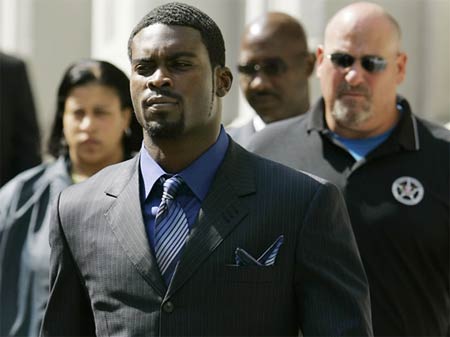
Vick in the Shadows


Surfing the channels, something caught my eye that I was not really expecting. The Michael Vick Project, which premiered a few weeks ago, documents Michael Vick's journey from an NFL icon turned convict to a normal law obiding citizen. But seeing this on television got me thinking about the publicity that Vick has gotten since his release from the federal penitentiary. I think it would be fair to say that if you don't follow the NFL and didn't see Vick playing for the Philadelphia Eagles this year, you may not even know that Vick was out of prison.
This leads me to believe that he has a team of publicists working tirelessly to build Vick's image somehow back to the level it was when he was playing in Atlanta. He was, as Doc Oc said in his August post compared to "another Hitler" by some clearly irratic critics and is now taking a more gentle approach to his integration back into the limelight of professional sports, that is if he can find another team to take a moral leap and sign him after his 1-year contract with the Eagles expired.
I also think it is interesting the outlet Vick (or his publicists) chose for his "redemptive" series. The series is airing on Black Entertainment Television, or BET. I don't know if Vick is trying to speak to a specific audience by airing the show on this network, or if BET was the only channel to take on the show.
I personally feel that Vick is taking the right approach to the "reconstruction" of his image. I won't dive into my feelings of his initial arrest but I certainly feel Vick deserves another chance. He has done his time and I believe, has the talent to make it in the NFL today.
What do you think, does Mike deserve another chance? What do you think of his attempts at integration and the rebuilding of his image?

Brainwashed? Not Me


I'll be the first one to argue that advertisements have no bearing on how me personally as a consumer. I will admit to watching numerous hours of television as a child and being exposed to the billion dollar industries of brand development. I have been making these claims for years but only through reading this recent article that we were assigned did I really contemplate the truth of my assertions.
The article more or less dives into the neurological aspect of commerical consumption by people today; "the amygdala, the hippocampus and the hypothalamus are dynamic switchboards that shape the decisions people make." The brain is entirely responsible for decision making, including the decisions we as consumers make on the types of things we will buy. If the trigger to our decision making lies in our brains, then that is where the marketing wizards of the worlds biggest corporations will aim their advertisements. Sound like brainwashing yet!
If you're not convinced consider this other bit from the LA Times Searching for the Why of Buy. Pepsi and Coke, two of the largest brands on this planet, have been perpetuating their advertisements for decades on the nation's youth. But what we rarely think about is: Pepsi and Coke are the same thing! They are like the article said, "based on a single sensory theme: sugar and water." So why do people ever get in the habit of buying coke rather than pepsi or visa versa, when despite minor taste differences, they are essentially the same thing. Unfortunately, this compulsion to buy a certain way boils down to one thing and one thing only, ads. Reading this LA times article has made me less adament in believing I am immune to advertisement because when I think about it I have numerous brands that I prefer to others. This lead to think why I would ever think I was immune to advertisement when I was clearly not. Are you immune, and do you, after reading this, consider advertisement to be a socially acceptable form of brainwashing?


Monday, March 8, 2010

Why Can't Illinois Get it Right?


In today's discussion Doc Oc briefly touched upon the corruption that this country has seen even in the past year. I am always appalled to find out of the new scandals in government. I decided to take a look at our great state of Illinois, which has argueably, in the past 10 years encountered more political contreversy than any other state.
Recent Illinois scandals began with Dan Rostenkowski in 1996, who served thirty-six years in Congress representing Illinois. He was convicted for mail fraud, but was specifically known for sending government payroll checks to non employees that did him personal favors. He was sentenced to seventeen months in federal prison.
There was also Governer George Ryan who was charged with awarding business friends state contracts for projects in exchange for gifts and money. He was indicted in '04 and in '06 was sentenced to six and a half years in prison under the official charges of racketeering, conspiracy, tax fraud, mail fraud, and lying to the FBI while under oath. His legacy plagued Illinois politics until he was one up-ed by his predecessor, Rod Blagojevich. We'll call him Rod for typing's sake. Rod, in a spontaneous fit of genious, decided to auction off Barack Obama's vacant seat in the Senate to the highest bidder. Needless to say this isn't quite legal. He is now awaiting trial and sentencing.
My only question is why Illinois. Is it the cows, the plains, or the vast expanses of corn fields that prompt corrupt politicians to come here. Maybe the policies are more lax here and allow for such corruption to occur. Something must be wrong as nearly all corruption related political contreversies have taken place in Illinois in recent years.

Friday, February 26, 2010

Which Light is Turned On?


Is your light turned on? The green one of course. This figurative "green light" is in reference to what drives you, or me rather since this is my blog. After starting to read The Great Gatsby and experiencing the incredibly vivid color descriptions of F. Scott Fitzgerald, our class was presented this question by our teachers. This was also supplemented by a recent New York Times article that referenced Fitzgeralds novel, posing the question, what is your green light?
Sadly, the only thing I can think of that truly drives me is my future, which would somewhere along the way include a level of financial success. This is not to say that happiness will be compromised, but both components play a part. As awful as it sounds all I really want to do is get into the best higher education institution possible and get the best possible job I can out of college. Laying it out in this manner makes my future sound depressing and devoid of any enjoyment, but I really don't see myself striving for a nobel peace prize.

Monday, February 8, 2010

The Rise and Fall of Cairo


Cairo, Illinois has been at the heart of the Midwest during the 19th century, but after the civil war ended and trading by boat subsided, this seemingly insignificant Midwest town has fallen by the wayside.

Hopefully my classmates have already made the connection, Cairo was the original destination of Huck and Jim in Mark Twain's The Adventures of Huckleberry Finn.

There was a mystique about Cairo in the story, created by the anticipation of Huck starting a life anew and Jim being reunited with his family. This aura of mysticism made me envision Cairo as a quaint Midwestern haven on the banks of the Mississippi. The truth is that Twain was not at all misleading at the time.

Quaint was probably not quite the word to describe the town, but it was certainly a noteworthy place. Cairo, during the early 1800's, as a result of its location on the river, was among the most important trading posts in the Midwest. The Mississippi and the Ohio Rivers unite on the banks of Cairo, which forced Cairo to become an industrial town. The Illinois Central Railroad also ran through Cairo, so it was just inevitable that Cairo would be at the heart of Midwestern trade.
Cairo was also a Union stronghold during the civil war in the 1880's. It served as an important supply base and a training center. By the 1900's, Cairo was at its all time high, as population would spike in 1907 at 20,000 people.
Most would assume that the Industrial Revolution of the 1900's would help an industrial town such as Cairo, yet that was all but true. Cairo was mainly at the heart of river trade, and trade by rail second. With the Industrial Revolution came the car and its introduction into the mainstream. It was not long until American business' came to realize that trade by car was more efficient than any other option. So when the entire country experienced a boom
Cairo was witnessing its own downfall.
And there lies the demise of Cairo. After 1910, a gradual decline in population began and has not stopped to this day. The population in Cairo is currently hovering around two and a half thousand. Cairo was at one time, a focal location in the Midwest, but now is steeped in poverty. 60% of schoolchildren in the Cairo Unified School District 1 are living under the poverty line, a figure that places them in the top twenty in the nation in this category.
I found it interesting and even more sad that this town, which was so well portrayed in the Adventures of Huckleberry Finn has fallen from its height as an industrial and trading powerhouse of the Midwest, to a dismal rural pit. All this is a result of the Industrial Revolution, possibly one of the most important things to happen in this country's history, which is certainly responsible for molding the US into what it is now. This makes me wonder what if. What if the Industrial Revolution never came? Would the US be a third world country stuck in the 1890's? Could our lives actually have been comprable to Huck's?

Saturday, January 30, 2010

Obama and Small Business

In President Barrack Obama's 2010 State of the Union speech, many topics of great importance were discussed such as the cost of education and rampant unemployment in the US. But one of the topics that really took center stage was that of small business in the states.
I like many other students in our American Studies class, am the child of a small business owner. My parent's company was at it's peak 12 people, but because of the recession it has shrunk to 7. The company manufactures athletic clothing for small children, and then distributes it to megastores such as Wal-Mart, Kohl's and Target. My step-dad, the owner of the business, voted for Obama but has been feeling the repercussions of Obama's "just tax it" mentality. I sat down and we discussed exactly Obama has done to hurt small business.
The first thing he made clear is that all companies are divided into two main categories (each of which have several branches), S-corp (small business) and C-corp (larger business'). C-Corp companies are often publicly traded or belong to a group of investors, therefore they are liable for any collapse of the business. S-corp companies are often on a much smaller scale and are owned by five or fewer (in most cases) people. C-corp companies are directly taxed on their income, whereas S-corp companies do not encounter a corporate tax. Now here is where the twist comes. The income that comes from the business is absorbed by the owner(s) if the business, so it appears that the money belongs to the owners but in reality it stays in the business to pay the expenses of the operation and only a portion of that initial money is pocketed by owners. So in conclusion, small business owners appear to be much wealthier on paper than they actually are. Now most people that are aware of Obama's policies known of his plan to tax the nation's highest earners, 250,000 dollars and up. So this poses a problem for my small business owners. They appear to make more than that amount on paper, and are consequently taxed on money they don't have.
Obama is also proposing a new health care plan that he intends to have the top tax brackets to pay. So again, small business owner are going to get slammed by additional taxes if the health care plan gets passes.
The third thing Obama is doing to hurt small business, ironically enough, is to stop what Bush had started. Bush was infamous for lowering taxes on the nations highest earners, a policy that is set to expire this year, which Obama has the ability to renew. By doing this, small business owners that appear to be among the nation's wealthies people, will get taxed again.

Although Obama is attempting to appeal to the hearts of average Americans by trying to help small business, he is instead raising taxes three times over for small business' that employ more Americans than any other type of business. I was, as most were, mesmorized by Obama's incredible public speaking. It is often hard to think critically of his ideas when they are worded so eloquently, but Obama's new pledges to help small business are not going to compensate for the damages that have already been done.

Thursday, January 7, 2010

Where the Wild Things Are


I think that most kids that did not live under a rock during childhood, knew and adored the story of Where the Wild Things Are. To revisit the story, it is the tale of a boy names Max. Max is never happy and resorts to being mischevious by dressing up in a wolf costume. His mom, as punishment sent him to bed without dinner. While in his room, Max dreams up a wild realm where the "wild things" run free. This realm was created by Max's imagination but it temporarily becomes a reality for him. He is at first scared of the wild things but then shows them some courage by staring them in the eye, and he is consequently deemed king of the wild things. He then gets lonely in a place that is not his home, and sails back to his room. When he gets back to his room, he finds a nice hot meal waiting for him, most likely from his mom.


The hidden message, I believe, is that even when kids feel something unfair is happening to them and they want to rebel, that is simply not the answer. Max rebels by going away to this other magical land but in the end he becomes lonely and he wants to go home. He also comes home to find a hot plate of food waiting for him, which would mean his parent still did really care for him. So the author may have been trying to say that even when parents punish their kids, it is for a reason, but that they will have compassion in the end. It is also important to note that there is never really a mention of the father. It is the mother that disciplines the child in the home, but it is also her that cooks the meal that is left in his room upon his return.
What other hidden messages can you find in this story? Do these messages correlate at all to the theme of women and children in American society?

Sunday, January 3, 2010

Sidenote

I had written the previous four posts over the course of the break but was forced to post them all now for a very interesting reason. I was told that the french government monitors the internet looking for anything descriminatory. I was told there could be fines and other minor consequences for posting hateful material on the internet. Although I do not feel as if what I said was offensive, I decided to wait until I got home to post these blogs. I think this just speaks to how strict France as a country has become, going as far as sensoring the internet, things that I thought only really happened in Communist countries like North Korea and China. This is not really intended to be a post but rather just something I thought should be shared along with the posts.

Those Americans...

It has always bothered me that people from other countries, notably Europeans, have a somewhat negative opinion of the US and its inhabitants. So one goal of mine while over there was to find out what exactly the French thought of the states.

One thing I learned quickly is that the French find Americans a little afraid to speak their minds, especially from a political aspect. It is common for there to almost daily debates over politics, most of which are for the sake of conversation and rarely become heated. I learned that the French think that Americans are afraid to discuss real issues, whether national or global because it is seen as taboo to really express opinions so publicly. They see, that as a result of this reluctance, conversation is often superficial and limited to essentially unimportant topics.

A second thing that I learned is that the French are troubled by the similarities between the political parties here. In France, the left and the right try to contrast themselves as much as possible. If the right is for something, it is almost systematic that the left will find a reason to be against it, and the opposite is true as well. So French people are a little confused at the fact that republicans and democrats can even at times agree on certain issues.

The third thing that I learned is more of a social issue. In France, you go to high school in your town, if your lucky you go to college, which will almost definitely be local, and you will then move back somewhere around where you grow up. With this said, it is normal for people to have the same friends from childhood well into adulthood. The same is not always true in the states. It is common for Americans to move around throughout their lives and consequently lose friends and then make new ones in their new location. When people move to new place, they will make friends based on common interests, if one person likes to play golf, they may make friends that like to play golf as well. This also serves to gather people with similar opinions, so by moving around and finding friends with the same interests, they are creating a kind of microcosm in which everyone they know feels the same way they do.

Although it would have been fun to run into these people, I did not meet anyone that was intensely anti American. For the most part, people that have been to the states think more highly of it then those who have not. Ask yourself what you think foreigners might think of Americans? Were you surprised by any of the things that French people saw in Americans?

Problems from Across the Pond 2

This is the second installment in a series concerning the problem of immigration in France. This issue takes place principally with the group known as the Maghrebins which is a blanket term used for people of Algerian, Moroccan or Tunisian descent. The figure now hovers around five million of these Maghrebins in France, a country of sixty million people.
France has worked to paint itself as a beacon of light in Europe by adapting a socialist political ideology. There are a couple reasons why the Maghrebins choose to come to France. The first and most important reason that they come to France is the security that the government affords immigrants. This security comes not only from an economic aspect but a social one as well. Somehow, either the government or society has made it such that it is acceptable to be an undocumented person living in France and reaping the benefits of a socialist government. Over the past few decades this topic of immigration has become taboo, thus making it less likely that the issue will be discussed seriously in a political forum. France has a system of social security that gives money to people unable to provide for themselves (similar to the American system but on a much larger scale). They also have a very loosely monitored universal health care system. What I mean by loosely monitored is that basically anyone that may be able to get their hands on documentation of some sort, whether legal or not, could head into any hospital unannounced and receive medical attention for little to no cost. If I were an immigrant is a third world country this would sound awesome, free money and health care. The French people see a problem with the fact that people can just come to their country and easily benefit from the tax money that they contribute each year. There is an even larger issue that goes along with this, the issue of national identity which French President Nicolas Sarkozy has launched a campaign to define, which will be the focus of my next post.

This previous viewpoint was explained with information provided by a very conservative older, and natural born French person. But I am attempting to cover both sides of the issue, so I found a family friend who is 17 to give me his opinion on the issue. He began, interestingly enough by telling me that me referring to it as an issue or a problem was getting off on the wrong foot. He sees no problem at all, the situation is all just a matter of circumstances. In France, the bad neighborhoods form in the outskirts of major cities, this term is commonly referred to as the banlieu. Poor immigrants, when looking for a place to immigrate to in France gravitated to these already struggling neighborhoods. It just so happened that a very good percentage of the people immigrating happened to be of Arab descent, thus forming a relatively large Arab population in France. The 17-year-old proceeded to explain to me why crime became a staple of the banlieu. The reason is simply that there is nothing to do there, so people resort to crime to pass the time. So, when all these circumstances are taken into consideration, Arab crime is just a product of the environment. Crime occurs in the banlieu because there is nothing else to do, and it just so happens that there is an overwhelming Arab population so they get a lot of heat for being the cause of crime in France.
These are the two contrasting viewpoints on the issue, coming from both ends of the political spectrum. I won’t give my opinion just yet, but I will share in the third and final installment in this series of posts.

Problems from Across the Pond 3

With the previous two posts I have only given background to the current problem that is taking place in France. The issue can be summarized in two words, national identity. The immigrants that come to France and take advantage of the socialist governmental system refuse to refer to themselves as French. The Maghrebins for some reason flaunt the fact that they live in France and take advantage of it, and still refuse to assume a French identity. Like I said before, government officials are not able to single out this particular group because that would be an outward act of racism, and therefore not an action that can be taken by a modern government such as that of France. So this leaves the French government between a rock and hard place, unable to solve this problem because it would leave them looking unprofessional. President Nicolas Sarkozy has launched a campaign to define national identity, a kind of indirect way of attacking this issue. He has to attack it indirectly because of this issue of political incorrectness. Because this specific group of immigrants is not agreeing to have themselves seen as French, Sarkozy has started this initiative to answer the question of what being French really means.

In my opinion, this fight is really not worth fighting. Natural born French people are renouncing their country, something that I see no point in, but they should nonetheless be allowed to say whatever they want. But this should not be made a racial issue, like most people in France are making it. If people are renouncing their country that is their problem, but if they are committing crimes they should be punished and even more severely if it is done blatantly to spit on their country. Although France doesn’t exactly abide by the same constitution as the states do I think freedom of speech should be protected. This issue should not be racial, because if someone does something illegal, they should be punished, but if one were to say something that wasn't exactly ideal in the eyes of the government, that should be protected